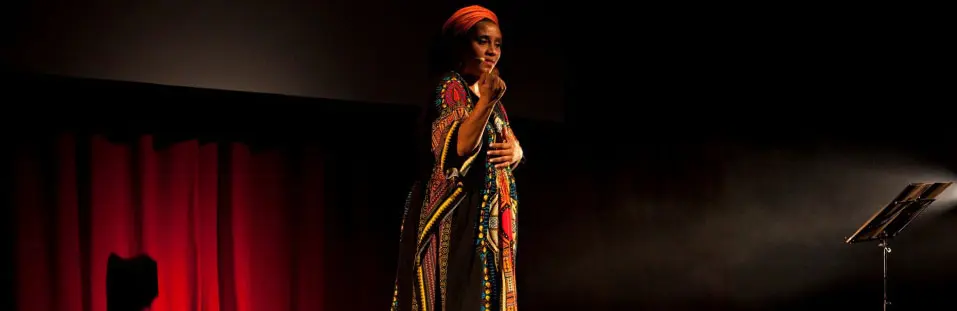
Poet . Storyteller
Based: Cape Town
Malika Lueen Ndlovu is an internationally published South African poet, playwright, performance artist and arts project manager based in Cape Town, South Africa. With a creative career spanning over 25 years, her work bridges poetry, storytelling, theatre and cultural activism, and she has presented her art on stages across Africa, Europe, Asia and North America.
A founder‑member of the Cape Town women writers’ collective WEAVE, Malika co‑edited the influential anthology WEAVE’s Ink @ Boiling Point: A selection of 21st Century Black Women’s writing from the Southern Tip of Africa. She also initiated the And The Word Was Woman Ensemble of female performance poets and joined The Mothertongue Project, a collective of women artists, writers and visual creatives dedicated to collaborative and multimedia expression.
As a performance poet, her live work draws on personal and collective histories, identity, healing and cultural reflection. She is known for her belief that “healing through creativity” transforms personal experience into compassionate art that resonates with diverse publics. Malika’s poetry and performance have been featured at major literary and arts festivals — including the Open Book Festival, Franschhoek Literary Festival and Poetry Africa — where she continues to shape conversations around poetic expression, community and resilience.
Malika has published five poetry collections (including Born in Africa But, Womb to World: A Labour of Love, Truth is Both Spirit and Flesh, Invisible Earthquake: A Woman’s Journal through Stillbirth and CLOSE) and two plays (A Coloured Place and Sister Breyani). Her latest book, Griefseed, which explores the regenerative nature of grief, was published in 2025.
Beyond her own writing, Malika has been a curator and presenter of poetry platforms including the Badilisha Poetry X‑Change and Badilisha Poetry Radio — Africa’s premier online poetry archive and broadcasting project — helping elevate performance poetry from the continent to global audiences.
Today, Malika remains a cultural voice and creative mentor, using performance, literature and public engagement to explore themes of identity, community, healing and transformation through the power of the spoken word.